🪑 Chair Emoji: From Classic Comfort To Sitting Sexy
If the world of emojis had a motto, it would be to always, “expect the unexpected.” Emojis we’ve grown accustomed to using to express our innermost thoughts can suddenly have a controversial double meaning. One of the most recent entries to this list is the 🪑 Chair emoji. The story behind how a simple chair became an Internet phenomenon is almost unreal and quite baffling. Did that get you excited enough? Hold on to your chair (pun intended)!
 Photo from Adobe Stock
It all began as a TikTok trend. Last September 2021, users of the app noticed that the comment sections of popular videos had an absurd number of chair emojis. Speculations flew. Did the chair emoji suddenly become an anti-racist symbol or a feminist statement? Nope, none of the above. Believe it or not, it began with a joke.
The Start of the Chair Emoji Trend
A week before the TikTok world got confused and excited, TikTok user Anthony Mai (handle blank.antho) shared two significant videos for his more than a million followers. In the video, he shared what he called an “inside joke” with his followers. The joke was that from that moment on, he’ll be replacing his laughing emojis with chair emojis. He encouraged his followers to join in the fun by saying, “if you’re watching this, you’re part of the inside joke.”
 Screenshot from TikTok
Some Internet sleuths weren’t having it, though. Sure, Anthony had a huge number of followers, but was it enough to create this crazy trend? Not for them. After a couple of investigations, netizens found out that TikTok influencer KSI (whose real name is JJ Olatunji) made a YouTube video about a chair last November 2020.
In the video, he laughed at a chair to prove that his laugh is contagious. Lo-and-behold, it worked! A lot of his followers said his laugh made them laugh. JJ’s YouTube account has a whopping 15 million followers.
Hidden Collaboration
Case solved? Not quite. When users replayed Anthony’s TikTok about the inside joke, before the video ended, Anthony said he will raid the “legend himself, @ksi.” Anthony also tagged @ksi in the video's caption, making people think they might be working together from the beginning.
Two days after Anthony shared the infamous chair emoji video, he posted another video. In that video, he revealed JJ is part of the “inside joke.” Since there are no hard and fast rules about this sort of thing, no one came after the two for what they did, even if they caused quite a lot of confusion online.
Sitting On Wood... To Face Sitting?
Anthony and JJ aren’t the only ones to blame, though. Several crazier theories have come out of the woodwork. For instance, users on the American discussion website Reddit believed that someone suddenly used the chair emoji sexually, in a sexual manner. Weird as that may sound, more and more people began to do it, and it eventually became a fad!
 Screenshot from Reddit
Sexual, in what way? Reddit users say netizens are using the chair emoji to tell their romantic partners they want to sit on their face in the middle of sex. It's sort of how the 🍆 Eggplant emoji represents a penis, or how the 🍑 Peach emoji is commonly used to describe one’s butt.
Too weird for you? Well, wait 'till you hear this: according to credentialed sexologist Alexandra Fine, face sitting or face riding is a hot and trendy move in the bedroom. Face sitting, in simple terms, is the sex act in which one party dangles their private parts over the lips of a second partner. This often happens in the middle of oral sex.
History Of Face Sitting
Face sitting is not an entirely new notion. Many from the first ancient societies would do it; it was a common practice in Egypt, India, China, and Japan. As a matter of fact, face sitting was reportedly popular among ladies of the upper class from as far back as the Medieval period. Face sitting gave them the sexual fulfillment they need, without the risk of falling pregnant. It was so popular that certain brothels in Japan specialize in providing women with this move. Did that explanation convince you to never look at chairs or the chair emoji the same way again? We feel for you.
History of Chairs
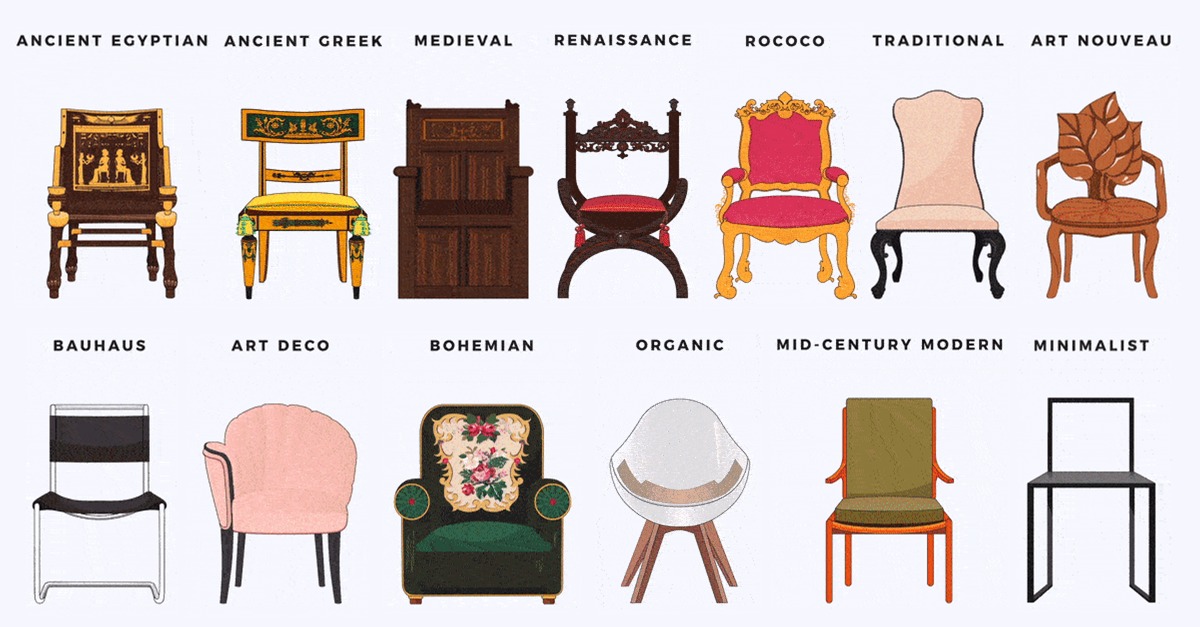 Photo from Arch Daily
Did you know that humans have been using chairs for hundreds of thousands of years? The Chinese were already using them, from as early as the 12th century. Meanwhile, the first known Greek chair dates back to the sixth or seventh centuries BCE. Even after all that, it's somewhat hard to believe that designers created the chair emoji only three years ago, while similar-looking emojis, like the 💺 Seat emoji, have been around for decades.
The Chair Emoji

Yup, it took that long for Unicode, the governing body of emojis, to realize the need for something as simple, and as basic as a chair emoji. When it finally arrived, just like what happened to the other emojis, when the chair reached various operating systems, platforms, and apps, each company designed the emoji according to its own style.
Check out how the chair emoji looks on some of the most popular platforms.
Chair Emoji on Different Platforms
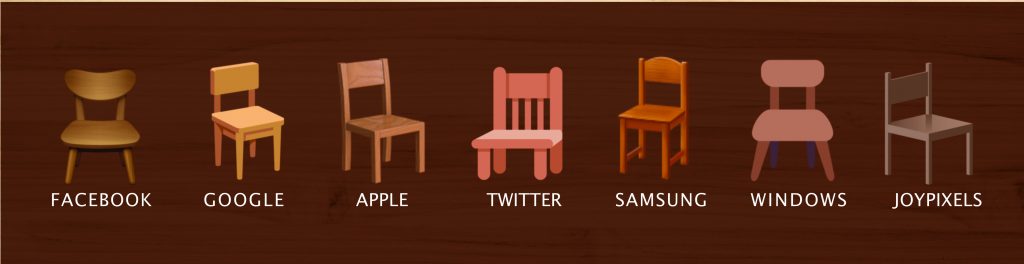
Apple, Google, and Samsung
Apple’s Chair is a side chair—a type of chair made of solid wood that’s often used in dining rooms. As seen in the picture, side chairs usually have a sturdy frame, but don’t have arms. Interestingly enough, Google’s chair belongs in the side chair category too, but it’s decorated in a much lighter shade. Size-wise, Google’s side chair is smaller, although if one were to inspect, he or she would see that its backrest is wider, and its seating section is thicker than Apple’s.
Meanwhile, the color of Samsung’s chair is halfway between Google's and Apple’s. It’s not too dark, not too light. More than that, the chair’s inviting curved-back design is definitely a focal part of the piece. This feature gives the chair a sophisticated touch.
Microsoft and Twitter
Moving on, in contrast, Microsoft’s chair emoji boasts a more modern design. It looks like the type of chair you could put your feet up on. Design-wise, what’s noticeable about the chair is its comfy-looking purplish-brown upholstered backrest and seat. The chair’s also got four sturdy legs, one pair that’s brown, and one pair black, at the back. The two back legs have a more rounded shape than the two front ones.
Out of all the chairs on the list, Twitter’s chair color has got to be the brightest. As seen in the picture, the chair’s brownish pink hue gives the piece a vibrant and refreshing look. If you swear you’ve seen the chair’s slatted back style, you probably have. The “slatted look,” as it’s commonly called, is a fixture in kitchen nooks and casual dining rooms.
Facebook and JoyPixels
The second to last chair emoji on our list is the Facebook chair. Sitting on this type of chair gives you the feel that you’ll be dining in style. Its chestnut color makes it look like it’s built of sturdy wood. Other features include a wide, curved backrest, and four strong, short legs.
Last but not least is the JoyPixels version. This simple dining chair has a sleek, minimalist, and industrial interior design style. Three of its most noticeable features include its long, tapered legs, solid deep brown finish, and wide, sturdy frame.
Traditional Chair Emoji Meanings
 Photo from Adobe Stock
Emojis are universal and understood in every language, but can sometimes be incredibly confusing from time to time. Netizens getting confused with emojis actually happens often, especially when an emoji suddenly gets a controversial new meaning far from what it’s originally intended for.
As we all know, that’s what happened with the chair emoji. Therefore, with that in mind, to clear up any remaining confusion, let’s go over all the other meanings of the chair emoji.
Popular Furniture Piece
In brief, the chair emoji depicts a piece of furniture commonly used for sitting, conversing, and interviewing. Users could also include this emoji in conversations related to other forms of furniture, or in discussions about refurbishing furniture.
Sitting
You know you can use the chair emoji in any context when referring to the act of sitting, for instance, when you’re waiting for someone, and you’ve been sitting in a place for too long. The metaphoric use of this emoji would be to describe one’s self or another person as a “sitting duck,” a person or object that is vulnerable to attack or other forms of risk. If you're going to go that route, put a 🦆Duck emoji after the chair emoji to better bring your point across.
Chair Person Or Chairman
To add to the list, the chair emoji is often used to refer to a chairperson or chairman. Include the emoji in discussions about those two important positions. Last but not least is another metaphorical use—the chair emoji is the ideal emoji to talk about “grabbing a chair.”
Grabbing a chair is not always something physical; as you might imagine, the emoji fits right in virtual scenarios too. Before a big online event, insert the chair emoji in chats about reserving seats or slots for that affair. For example, you can say, “Are there any seats left in the virtual seminar?” or you can also say, “Come on in, reserve a chair emoji in the virtual chat before it gets grounded.”
Conclusion
As we end, if there’s one thing we can learn from the story of the chair emoji, it would be that each person, each thing, has its own back story—even emojis! Though we may not think much about the emoji we share every single day, learning about how you came to be will make you appreciate them more.
Be Updated
 Photo from Adobe Stock
Next, it would have to be the importance of being aware of our digital surroundings. The world of emojis is so spontaneous and fluid that new meanings seem to pop up every few seconds. If you don’t constantly update yourself, you’ll be left behind, or worse, taken for a fool.
Be A Social Media Watchdog
 Photo from Adobe Stock
Nowadays, nearly anything can have a sexual connotation, even something as simple as a chair. If your child is using social media apps like TikTok to browse online share content or both, it would be good to monitor your child’s social media-related activities as well. Luckily, TikTok allows users to impose certain restrictions to make the app more age-appropriate for minors.
Features like Family Pairing allow parents to link their accounts with their children’s accounts to control their settings remotely. Parents, for example, can use their phones to enable restricted mode, set screen time limits, and disable direct communications. Without parental permission, children cannot change these settings.
Furniture Emoji Wish List
On a lighter note, while we’re thankful for the chair emoji, all this talk got us thinking about other pieces of furniture we’d love to have in emoji versions. How about a nice lamp? Or a bookcase emoji, even? Are we the only ones puzzled that there are so many book emojis but no bookcase emojis? We’re not even asking for something overly trendy, just a classic multi-shelved storage unit would be great.
Make A Unicode Wish
If that got you thinking as well, why not recommend that emoji you’ve always wished existed to the Unicode Consortium?
The powers that be there weigh every request, although the organization turns down many for several reasons. For them to approve your request, you must follow some rather tight standards. But, should you wish to express yourself in a more graphic manner, you do not need to be a programmer or coder to create the perfect visual representation of your emotions. You could scribble your thoughts on a napkin.
The Unicode Consortium has a lot of information to help you get started with your request. Although the process is lengthy, if you have a strong drive, you’ll get through it. Keep going, and good luck!