Using an AI Chat Tool to Find the Right Emoji for Any Situation
Second-guessing which emoji fits your message? An AI assistant answers nuanced emoji tone questions instantly, no Reddit threads required.
You've typed the perfect message. Everything reads well. Then you stare at the emoji picker and feel completely lost. Does a smiling face with smiling eyes emoji seem passive-aggressive to your new client? Will a call me hand emoji confuse your colleague in Seoul? Could a skull emoji in a casual group reply read as hostile instead of funny? These are real questions, and even people who use emojis every single day hit walls like these. The uncertainty is not a sign that you're overthinking it. It's a sign that emojis are doing a lot more communicative work than most people give them credit for.
Key Insight: Emojis carry different meanings across cultures, generations, and professional settings. An AI assistant lets you ask specific, contextual questions about emoji tone in seconds, without sorting through conflicting forum posts. Whether you're messaging a new boss, chatting with an international contact, or trying to decode a Gen Z meme, AI can help you pick exactly the right symbol for the moment.
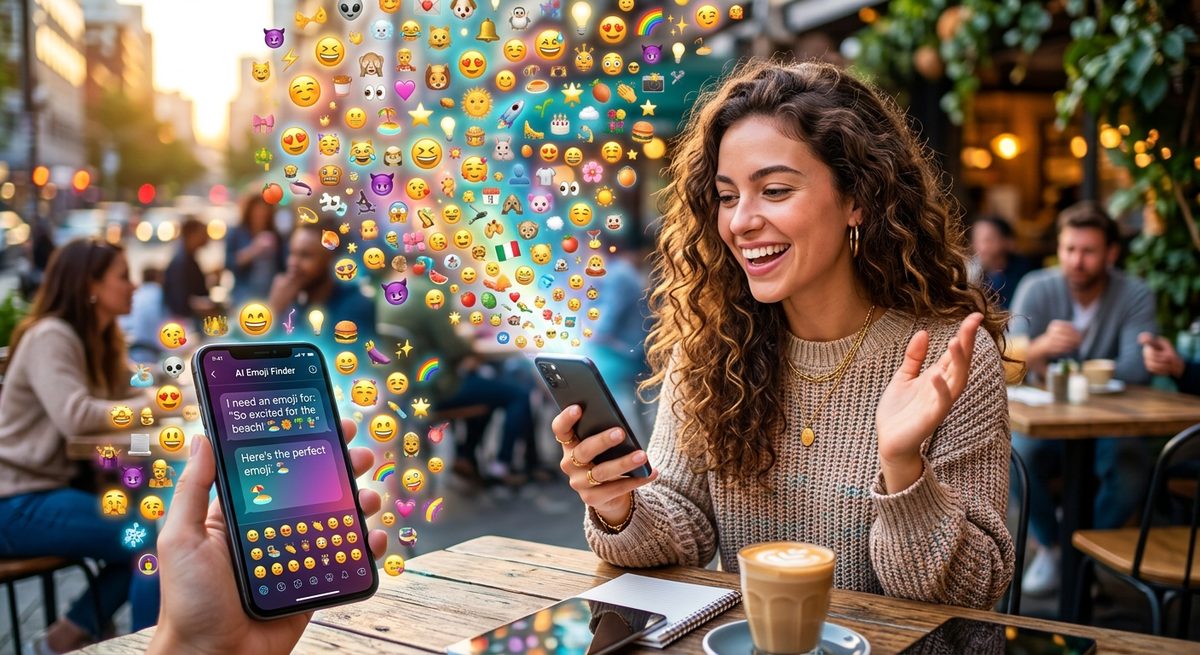
Why Emoji Choices Are Harder Than They Look
Emojis feel casual and fun. So why do they cause so much second-guessing?
The answer is context. The same emoji reads completely differently depending on who sends it, who receives it, and what platform they're on. A slightly smiling face emoji might feel warm and welcoming to one person, slightly cold and sarcastic to another. The peach emoji emoji means something very different in a fitness context versus a social one. Generational gaps add another layer entirely.
Research into digital communication confirms that emoji interpretation varies based on cultural background, regional customs, local slang, and even platform rendering differences. The same character can look visually distinct on iOS versus Android, which shifts how it lands emotionally.
So no, you are not overthinking it. The ambiguity is built in.
When You Second-Guess Yourself Most
Most emoji confusion clusters around a few predictable situations:
- Professional messages: Is a thumbs up emoji too dismissive? Is a grinning face with smiling eyes emoji too informal for a first email to a new client?
- Cross-cultural chats: Does ✌️ mean peace, victory, or something else depending on the country?
- New slang and memes: What does moai emoji actually mean right now? Is nail polish emoji playful or passive-aggressive in this context?
- Sensitive conversations: Can you use any emoji at all when someone shares difficult news?
- Generational differences: Will your emoji read as effortful or completely clueless to someone 15 years younger?
These are not trivial worries. Getting emoji tone wrong in a professional or cross-cultural setting can genuinely shift how someone perceives you, before you even have a chance to clarify.
The Old Way: Trawling Forums and Getting Conflicting Answers
Before AI tools became widely available, the standard approach was to Google the emoji or search Reddit. And this works, sometimes.
But the results are often inconsistent. One thread says grimacing face emoji is friendly and self-deprecating. Another says it reads as fake and passive-aggressive. A third post is from 2019 and wildly outdated. You end up spending 20 minutes reading emoji forums instead of sending a two-sentence reply.
The other option is texting a friend to ask, which works but has obvious limits. You need the right friend, available at the right moment, with enough cultural overlap to give you a relevant answer.
What an AI Assistant Does Differently
An AI assistant changes the interaction model entirely. Instead of searching for general definitions, you ask a specific, contextual question and get an answer shaped around your actual situation.
Here is a numbered list of the kinds of questions you can bring to it:
- "I'm emailing a new client in Japan to confirm a meeting. Is it okay to end with a 😊?"
- "My manager sent me a message with a upside-down face emoji. Is that passive-aggressive or playful?"
- "I want to respond to a meme with 💀 in a group chat with coworkers. Will that land right?"
- "What emoji says 'thanks, got it' without sounding dismissive?"
- "What does saluting face emoji mean and when is it used correctly?"
These are not questions that search engines handle well. They require understanding nuance, reading tone, and knowing current usage. That is exactly where AI performs best.
How to Phrase Your Questions for Better Results
The more context you give, the better the answer. Instead of asking "what does fire emoji mean," try: "I'm complimenting a coworker's presentation in Slack. Is using 🔥 appropriate, or does it seem too casual for that setting?"
You can also run follow-ups. If the first suggestion doesn't feel right, say "that still seems too formal" or "I need something warmer" and the AI will adjust. It's a back-and-forth conversation, not a static lookup.
Comparing Your Options for Emoji Research
Here's how the main approaches stack up:
Method
Speed
Context-Aware
Up to Date
Works for Nuance
Google Search
Fast
No
Sometimes
Rarely
Reddit / Forums
Slow
Partially
Hit or miss
Sometimes
Ask a Friend
Variable
Yes
Yes
Yes
AI Assistant
Fast
Yes
Yes
Yes
Trying an AI chat gives you the speed of a search engine combined with the contextual understanding of a knowledgeable friend who actually knows current slang.
Cross-Cultural Emoji Use: A Bigger Issue Than Most People Realize
If you regularly message people in different countries, emoji literacy becomes genuinely important. A thumbs-up 👍 is considered rude in parts of the Middle East and West Africa. The ✌️ symbol carries different connotations in Japan versus the UK. A grinning face with sweat emoji reads completely differently to a 22-year-old in the US versus a 50-year-old in Germany.
Cross-cultural communication research has long established that nonverbal cues are highly culturally specific. Emojis are the digital equivalent of facial expressions and hand gestures, which means they carry the same potential for misreading across cultures. The stakes are real.
An AI assistant that understands cultural context can flag these issues before you hit send. You can ask directly: "Is the folded hands emoji emoji appropriate to use with a contact in Thailand?" and get a clear answer that accounts for local meaning and current usage, not just the original Unicode description.
Practical Uses Beyond Just Picking an Emoji
The value of AI emoji assistance isn't limited to choosing the right symbol in the moment. People use it for a wider range of things than you might expect:
- Decoding an emoji someone else used, especially in ambiguous messages
- Understanding emoji combinations, since 💀 alone means something different from 💀💀 or face with tears of joy emoji💀
- Staying current with emoji slang that evolves fast on TikTok and other platforms
- Learning how an emoji reads across different age groups
- Identifying which emojis to avoid entirely in formal or international contexts
How to Get the Most Out of AI Emoji Advice
A few habits make the answers you get significantly more useful:
- Describe your relationship with the recipient. "My manager" versus "a close coworker" versus "someone I just met" changes the answer considerably.
- Mention the platform. A Slack message at a startup reads differently than an email at a law firm.
- Name the tone you're going for. Warm, funny, professional, casual, apologetic. AI can match suggestions to your actual intent.
- Ask for alternatives. If the first suggestion doesn't feel right, ask for two or three other options with brief explanations of each.
- Ask how it might land negatively. Not just "what does this mean" but "how could someone interpret this in the wrong direction?"
The Confidence You Gain from Asking
There's something genuinely freeing about having a tool you can ask anything without judgment. Emoji questions can feel embarrassing to raise with colleagues. Nobody wants to admit they spent five minutes deciding between 😊 and 🙂. But these small choices affect how you come across, especially in text-only communication where tone has no other signals to lean on.
Getting the emoji right in a professional message can make you seem warmer and more in tune with the other person. Getting it wrong can introduce friction that wasn't there before. That difference matters, even when the choice seems small.
Your Emoji Confusion Stops Here
Emojis are a genuine communication layer now, not a novelty feature. They carry tone, humor, warmth, cultural signal, and emotional subtext all at once. Making good choices with them is a real skill, and it's one you can sharpen with the right help.
The fastest path forward is to ask directly, clearly, and conversationally, with enough context to get an answer that actually fits your situation. The next time you're staring at an emoji picker wondering whether your choice is going to land right, you don't have to guess. You don't have to search Reddit. You can just ask.