Saving Emoji Reaction Videos From YouTube and TikTok for Offline Use
Emoji fans and reaction content lovers can save their favorite videos from YouTube, TikTok, and Instagram for offline study, archiving, and creative use.
Emoji reaction content has become its own genre. Whether it's someone breaking down the hidden meaning behind a string of fire emojis, a creator doing a dramatic face-cam react to a trending meme, or a whole challenge built around a single symbol, these videos spread fast and disappear just as quickly. Fans who love this content know the frustration of searching for a clip they bookmarked only to find it gone. Saving these videos offline is not just convenient, it is how the most dedicated emoji enthusiasts actually study, archive, and work with the content they care about most.
Before You Read On:
1. Reaction videos and emoji challenge clips get deleted, set to private, or geo-restricted more often than most people expect, making offline saves the only reliable archive.
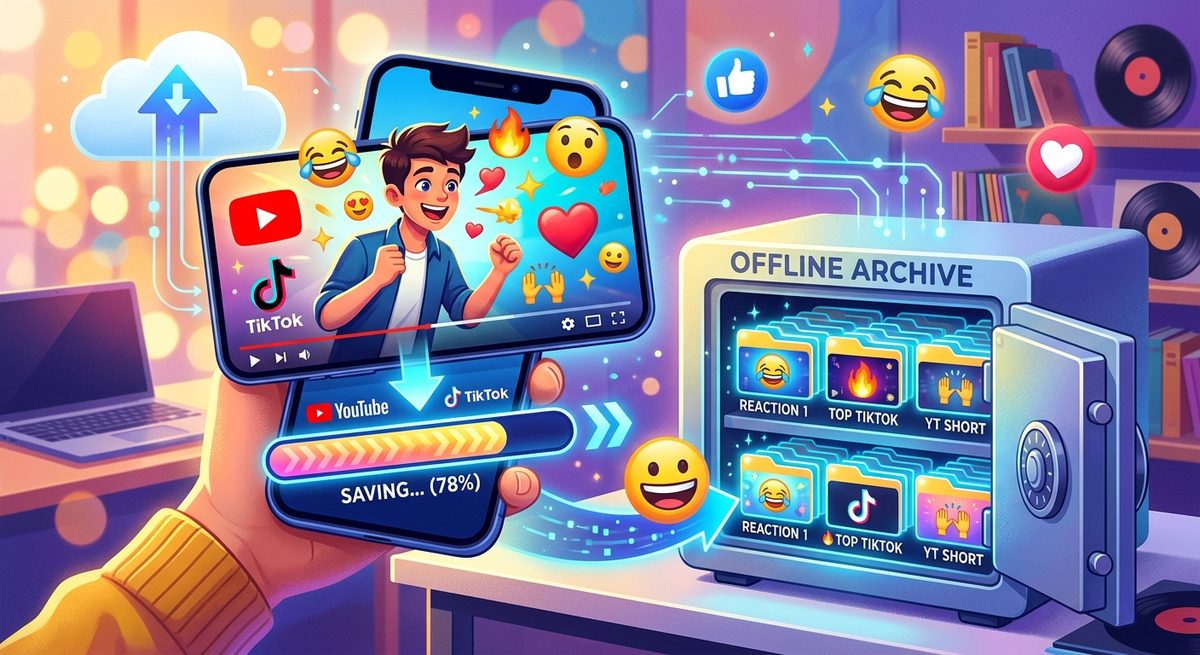
2. YouTube, TikTok, and Instagram each host a different flavor of emoji content, and each platform needs its own download approach.
3. Saving videos for personal study or creative reference is common practice among content creators and emoji culture researchers alike.
Why Emoji Reaction Content Disappears So Easily
The internet feels permanent but individual pieces of it are surprisingly fragile. Creators delete videos after receiving copyright strikes. Accounts get suspended mid-trend. Some content is region-locked so it vanishes for viewers in certain countries. Even sponsored emoji challenge posts have a shelf life, pulled down after a campaign ends.
Reaction videos as a format have been around for well over a decade. But the genre exploded once short-form video gave creators a frictionless way to film themselves reacting to viral content. Emoji challenges, in particular, are built on momentum. Once the moment passes, many creators either archive or delete the original post. If you are someone who studies emoji culture, collects examples of how certain symbols are used, or just wants to rewatch a funny emoji skit on a long flight, saving the video offline is the only real solution.
YouTube: Where Emoji Culture Gets Its Depth
YouTube is where the long-form emoji content lives. Think 20-minute deep dives into the history of a single symbol, side-by-side reaction videos comparing how different cultures interpret the same emoji, and commentary on viral emoji moments that already happened months ago. These videos tend to be more researched and more dense than anything on a short-form platform.
For emoji enthusiasts who want to study this content, watching once is rarely enough. You might want to pause, rewatch a specific segment, or compare a clip to something else without needing a stable internet connection. Using a reliable YouTube downloader lets you pull those longer videos into a local folder where they are always accessible, regardless of what happens to the original upload.
This is especially useful for creators and researchers. Emoji, as a communication system, is still being documented and analyzed. If you are building a personal reference library of how emoji use has evolved on video platforms, losing access to key clips is a real problem. A local archive prevents that.
TikTok: The Heartbeat of Trending Emoji Challenges
TikTok is where emoji challenges actually start. A creator posts a video using a specific emoji combo in a new way, the duet chain begins, and within 48 hours the format is everywhere. These moments are fast, chaotic, and genuinely hard to track unless you are watching in real time.
The issue is that TikTok content cycles out of visibility almost as fast as it rises. A video that gets 2 million views in a week can become nearly impossible to find a month later, buried under newer content or deleted by the original poster. For anyone who wants to document emoji trends, this is a documentation crisis in slow motion.
Grabbing those clips with a TikTok downloader means you can keep the content regardless of what the platform algorithm does next. Whether you are cataloguing which emoji combos sparked challenges in a given month or just building a personal collection of reactions you loved, the download step is what separates a viewer from an archivist.
Here are the types of TikTok emoji content most worth saving offline:
- Emoji challenge origin videos, the first post in a trend chain
- High-engagement reaction threads where creators duet each other using the same emoji
- "Emoji decode" skits where creators act out what a specific emoji string means
- Behind-the-scenes creator commentary on viral emoji moments
Instagram Reels: The Emoji Combo Lab
Instagram occupies a slightly different space. Reels featuring new emoji combos tend to be more polished than TikTok equivalents. Creators use them to showcase aesthetic uses of emojis, experiment with new sequences, or ride a cross-platform trend that started on TikTok but landed on Instagram with a different flavor.
The Reels format is also popular among emoji artists and digital designers who use emoji in visual storytelling. These posts often combine specific emoji sequences with text, music, and editing that makes them a different kind of artifact than a raw reaction video. They are worth preserving for that reason alone.
Using an Instagram downloader is the straightforward approach for pulling Reels to local storage. Instagram does not offer a native download option for most content, so a dedicated tool is the only way to keep these clips outside the app.
What You Can Do With a Local Emoji Video Archive
Once you have videos saved, the possibilities for emoji enthusiasts are more interesting than just rewatching.
Here is a practical list of how people actually use their offline collections:
- Side-by-side comparison of how different creators react to the same emoji challenge
- Frame-by-frame study of visual emoji combinations that appear briefly in a video
- Personal trend timelines organized by month to track how emoji culture shifts
- Reference material for creating original content inspired by what already worked
Having a local archive also means you can watch without buffering, share clips in situations where streaming is not an option, and keep content even after your social media accounts are deleted or suspended.
Staying on the Right Side of Copyright
Saving videos for personal use falls into a different category than distributing them publicly. The general principle across most platforms is that downloading content you do not have rights to redistribute is something to approach carefully.
There are a few practical guidelines worth keeping in mind:
- Save for personal study, reference, or archiving, not public redistribution
- Never repost a creator's video as your own content without permission
- Credit the original creator if you ever reference a saved clip in your own work
- If you are using saved emoji reaction content in a school project or research context, check your institution's media use policies
Most emoji enthusiasts who maintain video archives do so for personal and creative reasons. The goal is to preserve access to content they value, not to take credit for someone else's work.
Your Offline Emoji Library Is Waiting to Be Built
The most dedicated fans of any content category do not rely solely on platforms to keep that content available. Emoji reaction culture moves too fast and disappears too easily for passive viewing to be a sustainable strategy. Between long-form YouTube explainers, trend-setting TikTok challenges, and polished Instagram Reels, there is a rich ecosystem of emoji video content worth preserving.
Building an offline archive is a practical act of cultural documentation. You decide what matters, you keep it, and you have it whenever you need it. The platforms will keep changing. Your saved collection does not have to.