How to Turn Emoji Unboxing and Reaction Videos Into Readable Text
Learn how to turn emoji reaction and unboxing videos into readable text for research, blogging, and content analysis in a few simple steps.
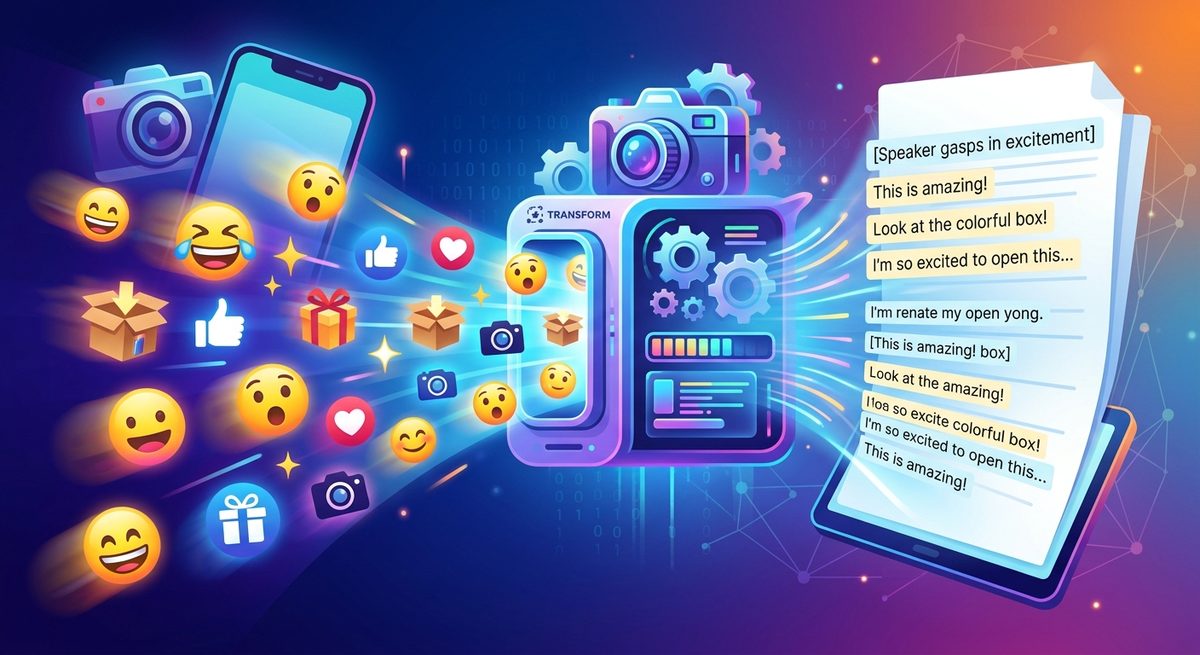
Emoji culture has a heartbeat on YouTube. Whether someone is reacting to a new emoji keyboard rollout, comparing how the same symbol looks across different platforms, or running through emoji trivia with their audience, these videos pack genuine insight into how people relate to digital symbols. The problem is that all that insight is locked inside audio and video, which makes it hard to quote, analyze, or build on in written form. That is where transcription comes in, and it is simpler than most people expect.
Key Takeaway: Emoji reaction and unboxing videos on YouTube hold real value for researchers, bloggers, and content creators who want to understand how people talk about digital symbols. Turning those videos into readable text takes only a URL and a transcription tool. You get timestamped quotes you can copy, cite, and search, without rewatching hours of footage or typing notes by hand. The workflow works for single uploads and for full playlists.
Why Emoji Videos Are Worth Analyzing in Writing
Emoji are not just decoration. The visual symbols used in digital communication trace back to Japanese mobile culture in the late 1990s and have grown into a global language with thousands of characters, each carrying different meanings in different cultural contexts, as documented in the history of emoji. YouTube has become one of the most active spaces where that evolution gets documented in real time.
When a major platform updates its emoji set, reaction videos follow within hours. Creators film themselves scrolling through new designs, comparing them to older versions, and debating which platform gets certain expressions right or wrong. Emoji unboxing channels build entire communities around these moments. Researchers tracking how visual language shifts over time have a rich source of primary material in these videos. Bloggers covering emoji culture need direct quotes to give their posts texture. None of that is possible if the content stays locked in video form.
What Bloggers and Researchers Actually Need
A blogger writing about how audiences reacted to a major emoji update does not just need a summary. They need the actual words people used. Did viewers describe the new designs as "too polished" or "finally realistic"? Did they mention specific emojis by name? What comparisons came up most often? Those details live in the spoken content of the video, buried somewhere between minute four and minute eighteen.
Researchers studying digital communication face the same issue at a larger scale. A single YouTube playlist on emoji keyboard comparisons might contain dozens of videos, each an hour or more long. Watching all of them to extract the relevant passages is not practical. Transcription turns that footage into searchable, quotable text that can be filtered, highlighted, and cited properly. The Unicode standard governs which emoji exist and how they are encoded, but it is YouTube creators who shape what those emoji mean to everyday people, and that context lives in their words.
The Workflow: Paste, Read, Copy
The process is genuinely straightforward. You start with a video URL, paste it into a transcription service, and within moments you have a full text version of everything said on screen. YouTube transcripts work this way, giving you a timestamped breakdown of the spoken content so you can jump straight to the part of the video that matters. If a creator spends the first ten minutes on sponsor reads and the useful emoji comparison starts at 11:42, the timestamp tells you exactly where to look without scrubbing through manually.
The text you get is searchable. You can use your browser's find function to locate every instance of a word like "disappointed" or "perfect" or a specific emoji name. For bloggers, this means pulling usable quotes in minutes rather than hours. For researchers, it means the content of dozens of videos becomes filterable data rather than a wall of footage.
You do not need to watch the video first. Paste the URL, scan the transcript, and decide whether the content is worth your time before you invest a single minute in pressing play.
When You Are Working With Playlists or Less Common Formats
Standard uploads are easy. Playlists and less common video formats take a slightly different approach. A dedicated emoji reaction channel might publish a full season of keyboard comparison videos as a playlist, or a trivia series might use unlisted links that behave differently from regular uploads.
That is when a broader workflow helps. If you need to transcribe videos across a range of formats, including those that fall outside the standard single-upload experience, a more flexible transcription approach handles them without requiring you to treat each video as a separate manual job. The result is still timestamped, still searchable, and still ready to quote. The difference is that you are not limited to the most straightforward case.
Researchers building a corpus of emoji-related spoken content across a playlist will find this especially useful. Instead of processing each video individually, you can work through a series systematically and end up with a coherent body of text that reflects the full arc of a creator's commentary on the subject.
Reading the Transcript Productively
Getting the transcript is step one. Getting value from it is a slightly different skill. The most useful approach for emoji content is to scan first and read second. Look at the timestamps to get a sense of the video's structure. Most reaction videos follow a recognizable pattern: a setup phase, the actual reaction, a comparison or judgment, and some form of wrap-up. The comparison section is usually where the most quotable, specific content lives.
For researchers, annotating as you read makes a real difference. Mark the passages where a speaker makes a cultural observation rather than a purely aesthetic one. The difference between "that looks weird" and "that reads as aggressive in my culture" is significant, and it is easy to miss if you are skimming without purpose. Cultural readings of emoji vary by region, by generation, and by platform habit, so the spoken commentary in these videos often contains nuance that a simple emoji review does not capture.
Bloggers can treat the transcript like an interview transcript. Pull the strongest three or four quotes, check the timestamps to verify context, and build the written piece around those moments. Attribution is straightforward since you have the video URL and the exact timestamp where each quote appears. That level of sourcing adds credibility to any piece covering emoji trends, which is a topic where opinion and fact can blur quickly.
Getting Context Right Before You Quote
One thing worth paying attention to is tone. A creator might say something ironic or hyperbolic for comic effect, and that kind of statement can mislead if it is pulled from context and treated as a genuine opinion. The timestamps in a transcript let you go back and listen to the surrounding thirty seconds before committing to a quote. That step takes less than a minute and prevents the kind of misrepresentation that undercuts an otherwise well-researched piece.
It also helps to note which platform or app version the creator is using. An emoji reaction video filmed on one operating system will reflect designs specific to that environment. The same emoji can look dramatically different on Android, iOS, and Windows, so a reaction to "the crying face" means something different depending on which version the creator is looking at. Transcript timestamps make it easy to match a verbal reaction to the visual moment on screen.
From Emoji Reactions to Written Record: Making the Content Last
Video content disappears from search results, gets taken down, or simply fades from view. A transcript does not. When you convert an emoji reaction video into readable text and save that text alongside your notes or research files, you are creating a durable record of something that was otherwise ephemeral. That matters more for emoji culture than for most topics because the content is tied to specific moments, a platform update, a Unicode release, a viral trend, and those moments do not stay current for long.
The blogs and research papers that will be read five years from now are the ones built on solid, quotable sources. Turning spoken emoji commentary into searchable text is how you make that happen, without any specialized technical knowledge and without spending an afternoon rewatching footage you already half-remember.
Emoji culture is moving fast. The conversation is already happening on YouTube. Now it can also happen in writing.