How Face Swap AI Takes Emoji-Style Expression Into Real Photos
Face emojis and AI face swap tools share the same core impulse: placing expressive faces into any scene. Here is how the two connect creatively.
Face emojis are everywhere. They show up in texts, comment threads, slide decks, and birthday cards. People spend real time hunting for the perfect grinning face, the side-eye, the tearful laugh. That hunt is not random. It is driven by something deeply human: the need to put a face into a moment and make it feel alive. And that same impulse, it turns out, is exactly what is powering one of the most popular AI photo tools online right now.
Key Takeaway:
1. Face emojis and face swap tools share the same creative drive: placing an expressive face into any scene or context.
2. AI face swap technology uses deep learning to map and blend facial features with photorealistic accuracy.
3. The same playful instinct behind scrolling emoji packs makes face swap tools genuinely fun for photos and creative projects.
Why Emoji Faces Hit Different
Think about the last time you scrolled through an emoji keyboard looking for the right face. You probably passed over a dozen options before landing on the one that captured the exact vibe. That specificity matters. Emoji faces are not decoration. They are shorthand for human expression, compressed into a tiny image that anyone can read instantly.
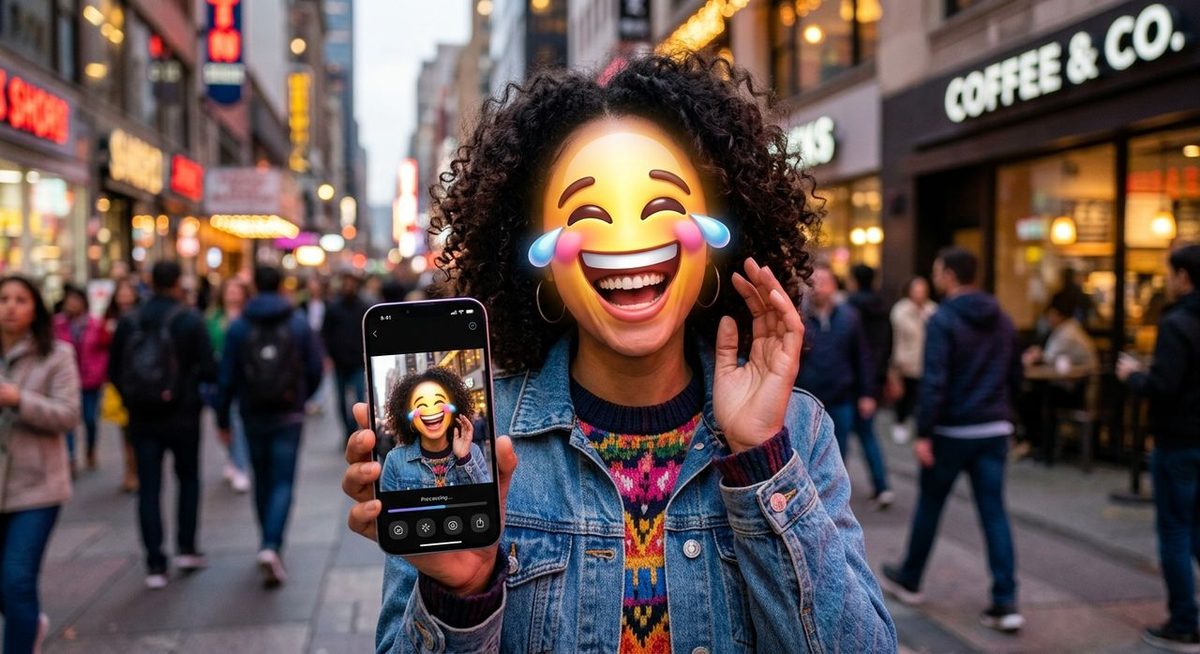
According to the history of emoji on Wikipedia, emoji originated in Japan in the late 1990s and have grown into a global visual language used by billions of people every day. The face category remains the most-used group by a wide margin. That is not a coincidence. Faces carry meaning in a way that other symbols simply cannot.
The reason comes down to how human brains are wired. We are built to read faces. We do it before we can speak. A raised eyebrow, a half smile, a wide-open stare: these signals travel faster than words. Emoji designers know this, which is why the facial expression library keeps growing, with each new pack trying to capture subtler and subtler emotional states.
The Expressions That Emoji Fans Chase
Ask anyone who spends time browsing emoji packs and they will tell you: the faces are the whole point. Here are the expressions people search for most, and why they resonate:
- The ugly cry face: pure, unfiltered emotion, used when nothing else captures how hard something hit you
- The side-eye: subtle skepticism, perfect for reacting to something absurd without typing a word
- The flushed or embarrassed face: that universal feeling of mild mortification that is also somehow endearing
- The raised eyebrow: a single-emoji way to say "really?"
- The melting face: modern, surreal humor that captures a kind of overwhelmed feeling words struggle to express
Each of these works because it is recognizable. You have felt that expression on your own face. You have seen it on someone else's. Emoji tap into that shared library of human feeling.
What Happens When a Tiny Yellow Circle Is Not Enough
Here is where things get interesting. For most people, using an emoji is enough. Drop in a laughing face, move on with your life. But for a growing number of people, especially those who create content, send personalized messages, or just love playing with images, the emoji is only the beginning of an idea.
The real impulse behind the emoji hunt is this: you want to put a face into a scene. You want to say "that is me in this moment." You want to imagine yourself, or someone you know, or a completely fictional persona, in a totally different context. Emoji do that in miniature. Now imagine doing it in a full photograph.
That is exactly what AI face swap technology makes possible. Instead of swapping in a stylized cartoon, the tool maps real facial features onto a target image and blends them in a way that looks photorealistic. The result is a photo where a face, your face, a friend's face, a character's face, belongs naturally in a scene it never originally appeared in.
How the Technology Actually Works
The mechanics behind face swap tools have come a long way from the clumsy cut-and-paste jobs of early photo editing software. Modern tools use deep learning models trained on large datasets of facial images. Here is a simplified breakdown of what happens when you run a face swap:
- The AI detects the face in your source image, mapping key landmarks like the eyes, nose, mouth, and jawline.
- It identifies the same landmarks on the target face in the destination image.
- The model warps and blends the source face onto the target, adjusting for lighting, angle, and skin tone to create a seamless result.
- A refinement pass smooths out any inconsistencies, so the final image looks natural rather than pasted together.
The whole process happens in seconds on a modern browser-based tool. No software download required. No technical skill needed. You upload two images and get a result that would have taken hours in professional editing software not long ago.
The Creative Possibilities That Open Up
Once you understand what face swap can do, the creative territory gets very wide. People are using these tools for all kinds of projects, and the range is genuinely broad:
- Personalizing greeting cards so the recipient sees their own face in a funny or heartwarming scene
- Creating social media content that plays with fictional scenarios, putting yourself into a movie still, a historical painting, or a fantasy landscape
- Testing out different looks for costume ideas or character concepts before committing to anything physical
- Building personalized memes that hit harder because they feature a familiar face
- Making gifts that feel completely custom without spending hours in complex software
The connection back to emoji culture is direct. When someone screenshots an emoji, blows it up, adds it to a meme, or builds a custom emoji pack from a photo of their own face, they are doing a version of the same thing. The face is the content. The context is the canvas.
Thinking About the Human Side of Face Technology
It would not be honest to write about face swap AI without acknowledging that the same technology raises real questions. Consent matters. Using someone else's face without permission, especially to place them in misleading or embarrassing contexts, is a serious concern. Most reputable tools include terms of service that restrict misuse, and many build in safeguards to flag or block problematic outputs.
The fun creative uses described above are genuinely harmless and widely enjoyed. Putting your own face into a fantasy setting is no different in spirit than snapping a photo with a cardboard cutout at a theme park. The key is that you are the subject, or you have permission from the person whose face you are using. Understanding that boundary makes the tool a creative playground rather than something more complicated.
From Emoji Packs to Real Portraits: The Same Instinct, Bigger Canvas
People who love emoji faces are not just looking for decoration. They are looking for expression. They want a face that captures a feeling, fits a moment, and communicates something that words alone cannot quite reach. That is exactly the impulse behind face swap creativity.
The face emoji is the idea in miniature. The AI photo tool is what happens when you scale that idea up into real images, with real detail, in real scenes. Whether you are placing yourself into a vintage travel poster or inserting a fictional character into a candid group shot, the motivation is the same one that had you scrolling through the grimacing face, the starry-eyed face, and the winking face last Tuesday until you found the one that felt exactly right.
The emoji was always just the beginning of something bigger.