How Sending a Heart Emoji Became the New Way to Say I Love You
From red to broken, every heart emoji signals something different. Learn what each color means, how platforms shift the message, and when words matter more.
A single red heart changed the way millions of people express love. Before texting existed, you wrote it down. Before that, you said it out loud. Now, in a conversation between two people who care about each other, one tiny character often does the job that a full sentence used to handle. That shift happened fast, and it kept going. Today the heart emoji family spans over a dozen variants, each carrying its own freight of meaning, and reading them correctly has become a small but real social skill.
Heart Emoji at a Glance
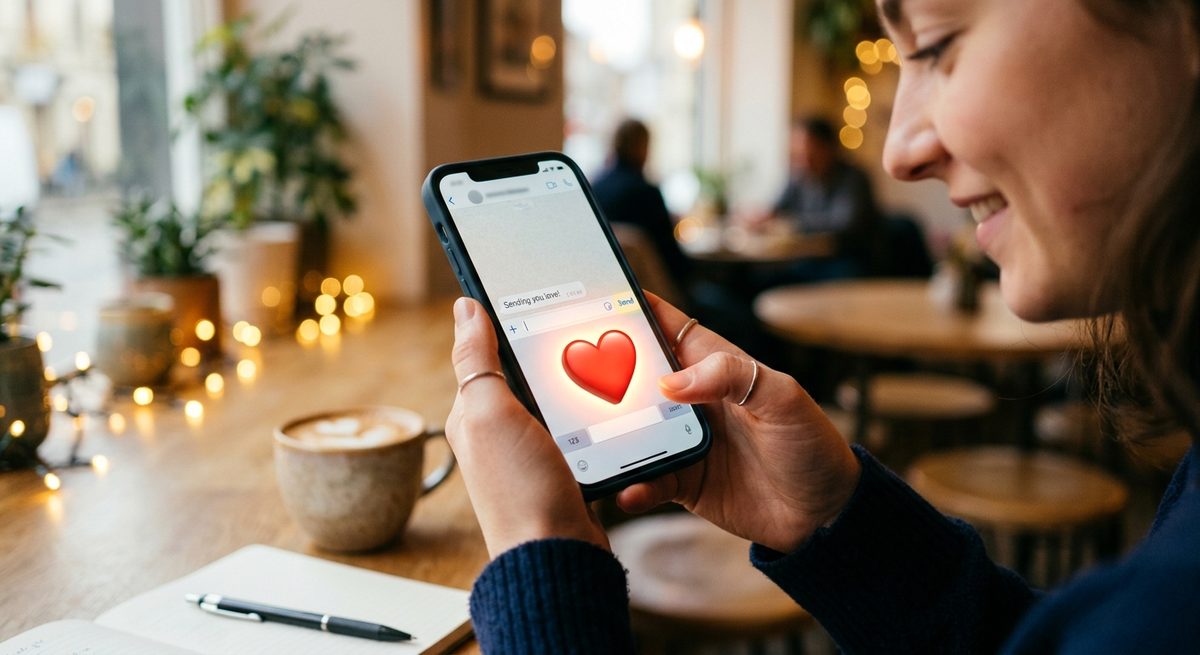
- The red heart is the default signal of deep love, but its meaning shifts depending on who sends it and what relationship surrounds it.
- Color carries distinct emotional weight: orange signals warmth, yellow signals friendship, green leans supportive, and black most often reads as ironic.
- Apple and Android render certain heart emojis differently, which can subtly shift how a message lands on the other end.
- Workplace hearts are rising in use, but blue and green variants remain the safest professional choices.
- Some moments call for actual words, not a symbol, and recognizing that line is what separates a gesture from genuine connection.
The Red Heart's Reign as Digital Shorthand for Affection
The red heart (❤️) is the one that started everything. It predates most other heart emoji variants by years and carries the heaviest emotional payload of any character in the Unicode set. When someone sends a red heart, the implied meaning is clear: warmth, love, or at minimum deep affection. It is not a casual character. Most people reserve it for partners, close family members, or friends they have known for a very long time.
That said, the red heart has been used so widely and for so long that it now lives at the intersection of intense feeling and simple habit. Long-term couples might drop a red heart into a mundane text because it has become shorthand for "I love you, talk later." New couples use it far more deliberately. A red heart in the first three weeks of dating carries a very different weight than the same character after fifteen years together.
Context shifts the signal considerably. A red heart at the end of a breakup message reads as bewildering rather than warm. Dropped into a group chat between old friends, it reads as wholesome celebration. Sent by a parent to a child, it is simply expected. The emoji is consistent. The reader supplies the context.
What Every Other Color Heart Actually Signals
Once you move past red, the palette tells a more nuanced story. The orange heart (orange heart emoji) sits closest to red on the emotional spectrum but reads softer. It is the choice people make when red feels like too much. That makes it common in early-stage relationships, in close friendships where romantic ambiguity hovers, or between people who want to show care without making a declaration.
Yellow (yellow heart emoji) typically signals pure, uncomplicated friendship. It is bright, non-threatening, and cheerful. People use it the same way they might have once drawn a smiley face at the end of a handwritten note. Green (green heart emoji) carries associations with growth, health, and nature. It shows up heavily in wellness communities, environmentally focused conversations, and as a symbol of supportive friendship. The blue heart (blue heart emoji) skews slightly more reserved, turning up often in professional contexts, sports team support, and mental health awareness spaces.
The purple heart (purple heart emoji) has a long dual life as both a tender gesture between close friends and a cultural marker within certain fandoms and subcultures. The brown heart (brown heart emoji) is newer to the set and is commonly used to celebrate warmth and inclusivity. The black heart (black heart emoji) is perhaps the most layered of all. Depending on who sends it, it reads as dark humor, gothic aesthetic, deep irony, or occasionally affection between people who bond over cynicism.
Then there is the anatomical heart (anatomical heart emoji). This one is not romantic. It depicts a realistic human heart and usually signals either medical context, a love of biology, or a very specific brand of dark humor. The broken heart (broken heart emoji) remains one of the most universally understood symbols in the whole emoji library: loss, grief, heartbreak, or sympathy for someone going through it.
How Apple and Android See the Same Heart Differently
Every heart emoji is defined by a Unicode standard, but how it appears depends entirely on the platform rendering it. The Unicode Consortium, which governs emoji specifications globally, defines what each character means, not what it looks like. That visual interpretation is left to Apple, Google, Samsung, and others, and they do not always agree.
The differences are subtle but real, and they matter most when the emotional register of a color is already borderline.
Heart Emoji Rendering Across Major Platforms
| Emoji | Apple | Google / Android | Potential Impact |
|---|---|---|---|
| ❤️ Red Heart | Deep crimson, classic contoured shape | Similar but slightly flatter | Minimal; reads the same on both |
| 🧡 Orange Heart | Clearly warm orange | Has appeared closer to red-orange on some older versions | Can shift from "casual warmth" to "near-love" depending on shade |
| 💔 Broken Heart | Clean, symmetrical crack | Crack is more jagged on some versions | Both read as emotional pain; visual intensity varies slightly |
| 🖤 Black Heart | Flat, solid black | Can render as very dark charcoal | Charcoal can feel softer; reads as ironic or aesthetic on both |
| 🫀 Anatomical Heart | Detailed, medically accurate | Comparably detailed | Reads the same across both: clinical or darkly humorous |
The practical takeaway is straightforward. The more nuanced the color, the more worth checking what it looks like on the recipient's device. When emotional stakes are high, a red heart is the safest choice because its rendering is most consistent across platforms.
Hearts in Different Relationships and What Each Context Demands
The same emoji lands completely differently depending on who sends it. That is not a flaw in the system. That is the feature. Heart emojis work precisely because they are flexible enough to mean different things in different relationships.
Between romantic partners, a red heart in a text carries no ambiguity. Between new friends still figuring each other out, it signals warmth but can land awkward if the recipient is more reserved. A yellow heart between two longtime friends says everything without overstating anything. A purple heart in a fandom context signals affiliation and community care rather than personal romantic feeling.
Coworkers present the trickiest terrain. A heart emoji in a Slack message or work email is no longer unusual, especially in creative industries and remote-first teams. The blue and green hearts are the safest professional choices because they read as supportive rather than personal. A red heart from a manager to a direct report, even in a congratulatory message, can land with unintended weight. A pink heart or sparkling heart (sparkling heart emoji) threads the needle between affectionate and not-too-much for warmer professional relationships.
Family dynamics add another layer. Parents and children have developed their own heart emoji shorthand in many households. Grandparents tend to treat all hearts with equal sincerity, which is actually quite charming. Siblings often default to black hearts, anatomical hearts, or combinations that would look hostile in any other relationship but read as pure affection within the context they have built together.
The Moment a Heart Emoji Is Not Enough
Heart emojis do something remarkable. They let people express affection fast, without the vulnerability that comes with saying it directly. That is also their limitation. A heart emoji is a gesture. It is not the same as being told in full sentences that someone values you, misses you, or loves you deeply.
The emoji works best as shorthand when the feeling is already established. Two people who have been together for years understand that a ❤️ at the end of a grocery list message is carrying a whole relationship behind it. But between people who have not yet said the words, or in moments when the weight of what is felt needs to be communicated clearly, a heart can feel like choosing comfort over truth.
There are specific moments when knowing how to say love you in full words, rather than in shorthand, hits differently than any emoji could. A heart at the end of "I love you" makes the text warmer. A heart sent instead of "I love you" sometimes just leaves a gap.
Knowing when to cross from symbol to sentence is the real skill. These five signals indicate a moment is calling for words, not a character:
- The relationship is at a turning point. If this is the first time affection is being expressed, an emoji is unlikely to carry the full weight of that moment.
- The other person is going through something serious. A heart sent to someone in grief or crisis can feel thin. Full sentences are warmer when the stakes are real.
- You have been sending hearts for months without saying what they mean. At some point, the gap between the gesture and the actual feeling is worth addressing out loud.
- You are repairing something after a conflict. A heart emoji cannot substitute for an apology or a genuine expression of care after things have broken down.
- The other person has used actual words with you and is waiting for reciprocation. Responding to "I love you" with a red heart is not the same as responding with the words.
Reading Incoming Hearts Without Getting It Wrong
Receiving a heart emoji is sometimes straightforward and sometimes a minor puzzle. The key is reading the full signal, not just the character.
A red heart from someone you just met in a casual professional context is worth noting as over-familiar. The same red heart from a close friend is almost certainly uncomplicated warmth. A broken heart from a near-stranger might be empathy, not personal grief. A black heart from someone who consistently uses dark humor with you is probably affection, not hostility.
The number of hearts also carries meaning. One heart is intentional. A string of hearts in different colors often means the sender is in an enthusiastic mood and is not attaching precise meaning to each one. A single anatomical heart from someone outside of medicine is a stranger choice and might be worth a follow-up.
Frequency matters too. If someone who rarely uses hearts sends one, it reads as more considered than the same character from someone who closes every message with three of them. The baseline shifts your interpretation entirely. A black heart from the most sarcastic person you know is affection. A black heart out of nowhere from someone who always sends red? That is worth a conversation.
When the Heart You Send Is the One That Actually Lands
The heart emoji will not stop evolving. New variants join the Unicode set as cultural needs shift. The meaning of existing ones drifts as communities adopt and redefine them. What read as deeply romantic in 2012 can read as casual warmth in 2026 because the character is used so widely now.
None of that makes the heart emoji less powerful. It makes it more interesting. A small red shape carries the weight of an entire relationship history when both people understand what it means between them. A careful choice of color can signal something a full paragraph might have fumbled. And knowing when to trade the symbol for actual words is not a retreat from digital shorthand. It is understanding that both have their place, and neither replaces the other.
The heart emoji became the new way to say "I love you" because it is fast, warm, and universally readable. It stayed that way because people figured out how to use it with intention. The ones who use it best know both when to send it and when to put it down and reach for the words instead.